
Mighty DOOM
Mighty DOOM is a single-player action game in which the Mini Slayer moves through demon-filled stages, automatically firing weapons while the player focuses on positioning, dodging, and manually activated special attacks. Runs combine temporary upgrades, persistent equipment, weapon choices, Glory Kills, and increasingly demanding enemy encounters.
Screenshots
About this app
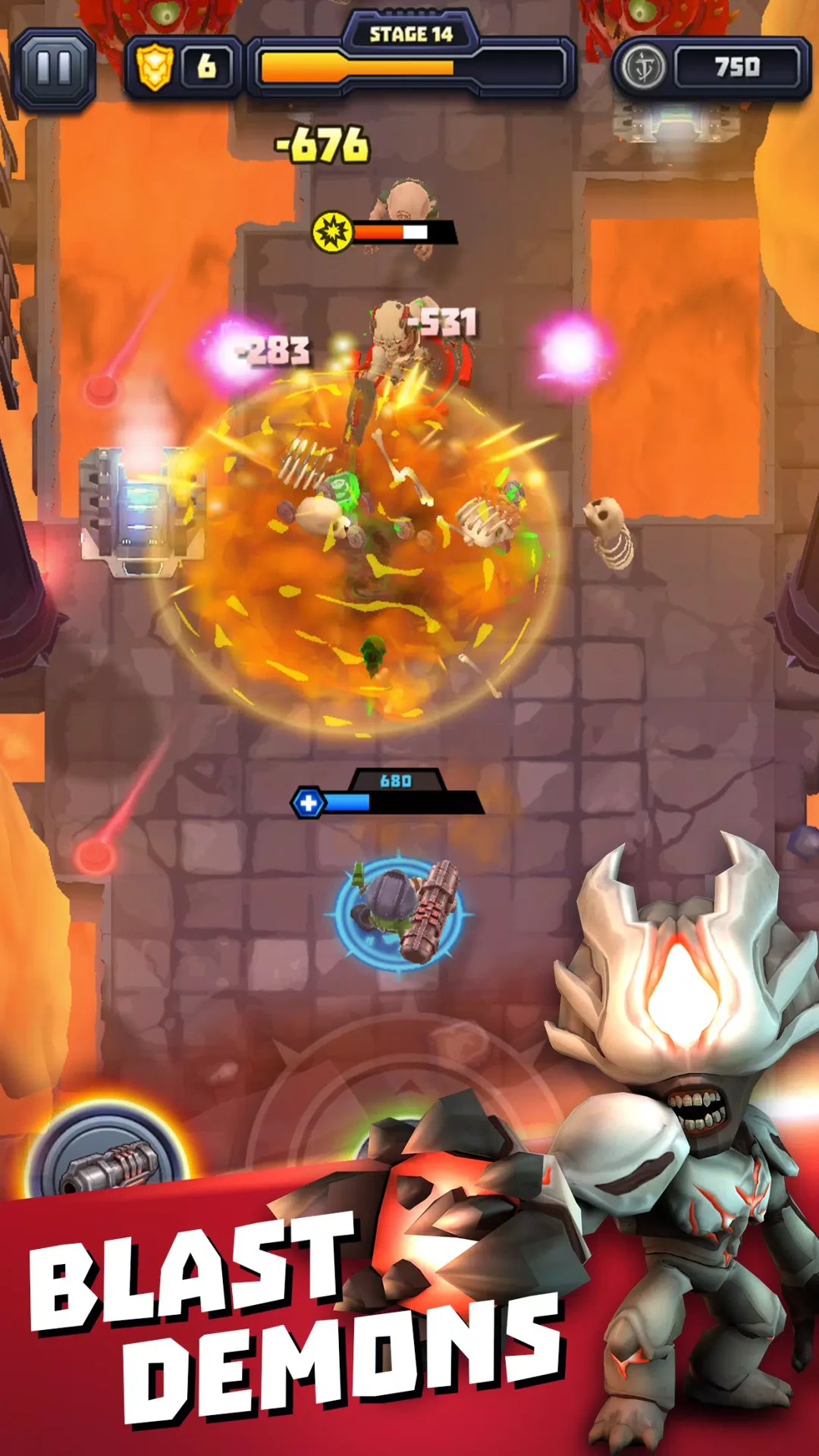
Mighty DOOM is a single-player action game with roguelite mechanics in which the Mini Slayer fights through demon-filled stages after demons take the protagonist’s pet rabbit, Daisy. The central activity is moving around enemy-filled arenas, surviving attacks, and defeating monsters with automatic gunfire, manually activated special weapons, and carefully chosen upgrades.
Movement, shooting, and combat
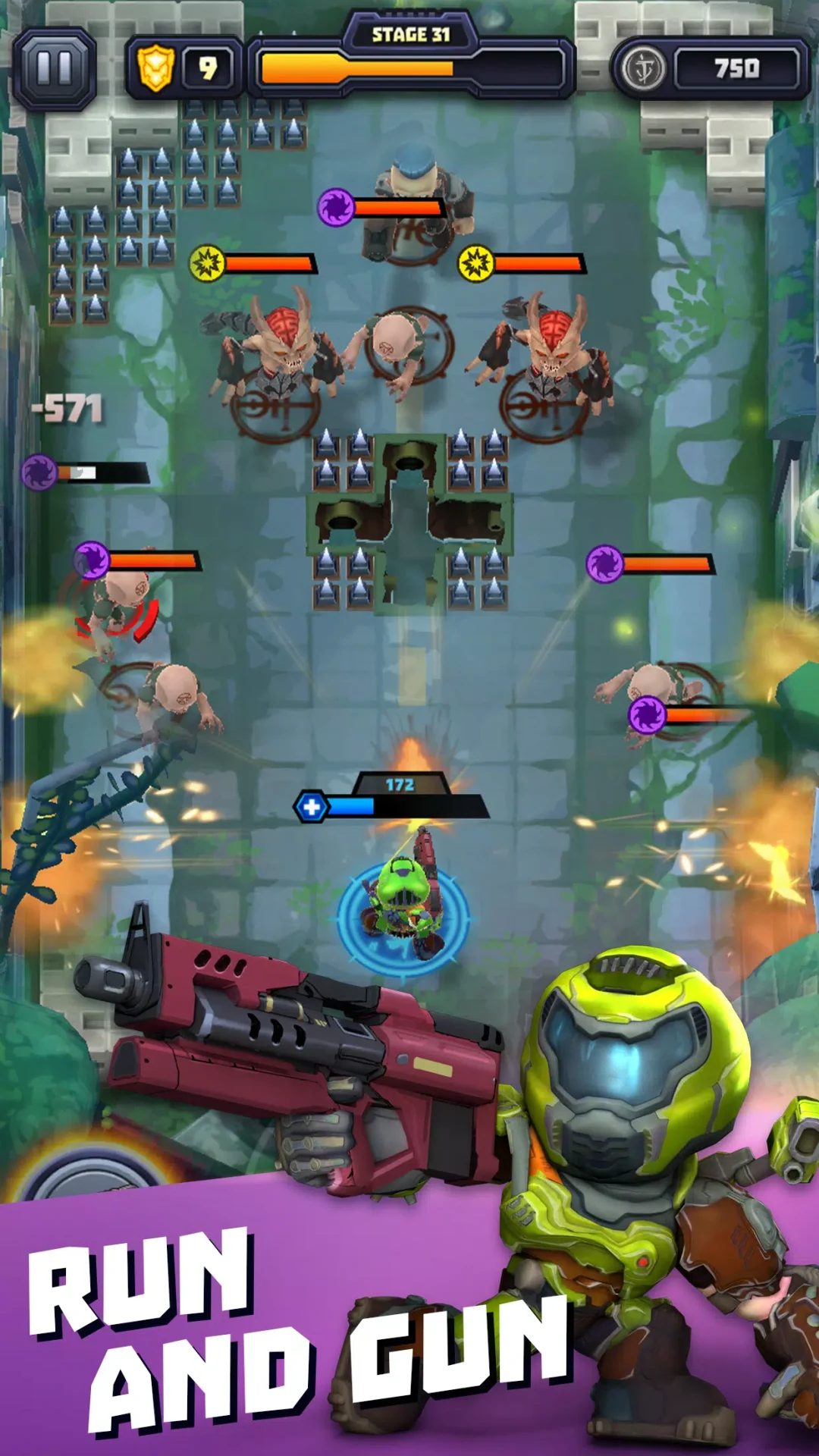
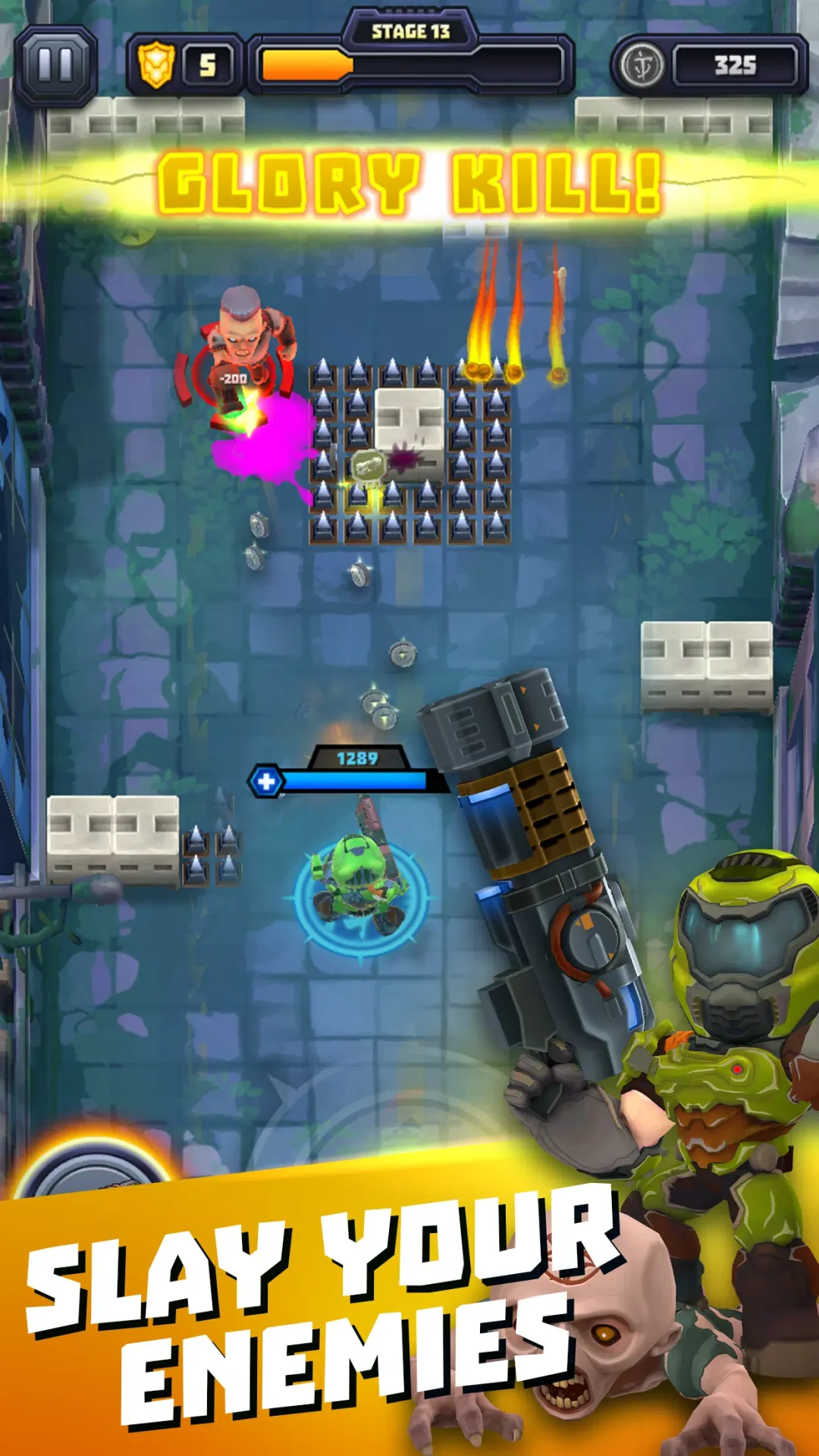
The Mini Slayer is controlled with an onscreen joystick. Shooting occurs automatically, so the player’s main movement task is to position the character, avoid incoming attacks, and keep enemies within effective firing range. Alongside a primary weapon, the character can use special weapons that require manual activation. The game also supports Bluetooth-connected gamepads, providing an alternative control method for players who prefer a physical controller.
Combat takes place against continuous groups of demons and includes a Glory Kill system. When a demon becomes dazed, the player can finish it with a Glory Kill and generate health pickups. This connects offensive timing with survival: weakening an enemy is not only a way to remove a threat, but can also create an opportunity to recover health during a run.
Runs, stages, and temporary upgrades
Each level is divided into multiple stages with different combinations of monsters and environmental hazards. The player begins a level with basic equipment and earns experience and temporary upgrades while fighting. These upgrades can alter the character’s capabilities during the current run, producing different weapon combinations and attack effects from one attempt to another.
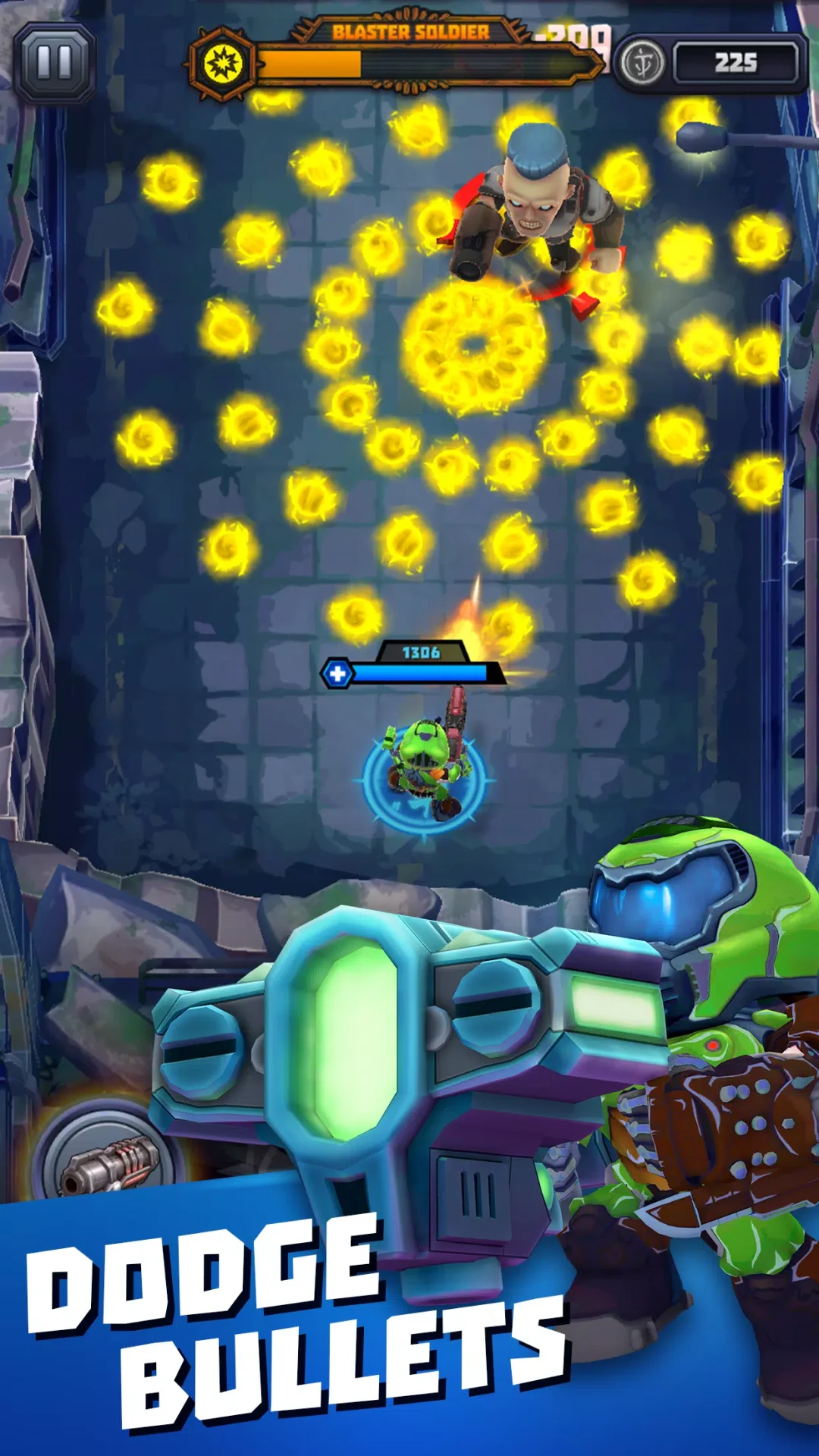
The documented stage structure describes levels containing about 40 stages, with boss encounters appearing approximately every 10 stages. Regular encounters can combine weaker enemies, sturdier opponents, and ranged attackers, requiring the player to respond to threats arriving from different positions. Later stages can introduce larger enemy groups, waves, stronger attacks, and more projectiles, making movement and awareness increasingly important.
Weapons and combat choices
Mighty DOOM provides three distinct weapons that can be switched during play, as well as a collection of 13 legendary weapons. The listed examples include the Rocket Launcher, Unmaykr, and BFG. Because weapons and temporary run upgrades can vary, the player’s available attack pattern is shaped by the choices made during each level rather than remaining identical throughout every attempt.
Temporary improvements disappear when a run ends, while equipment carried between levels forms part of the character’s longer-term setup. This separation gives the game two progression layers: immediate decisions made while fighting and persistent improvements made between runs. The source also describes upgraded weapon performance, gear improvements, dungeon hunter skills, and combo-based attacks as part of the progression system.
Enemies, bosses, and presentation
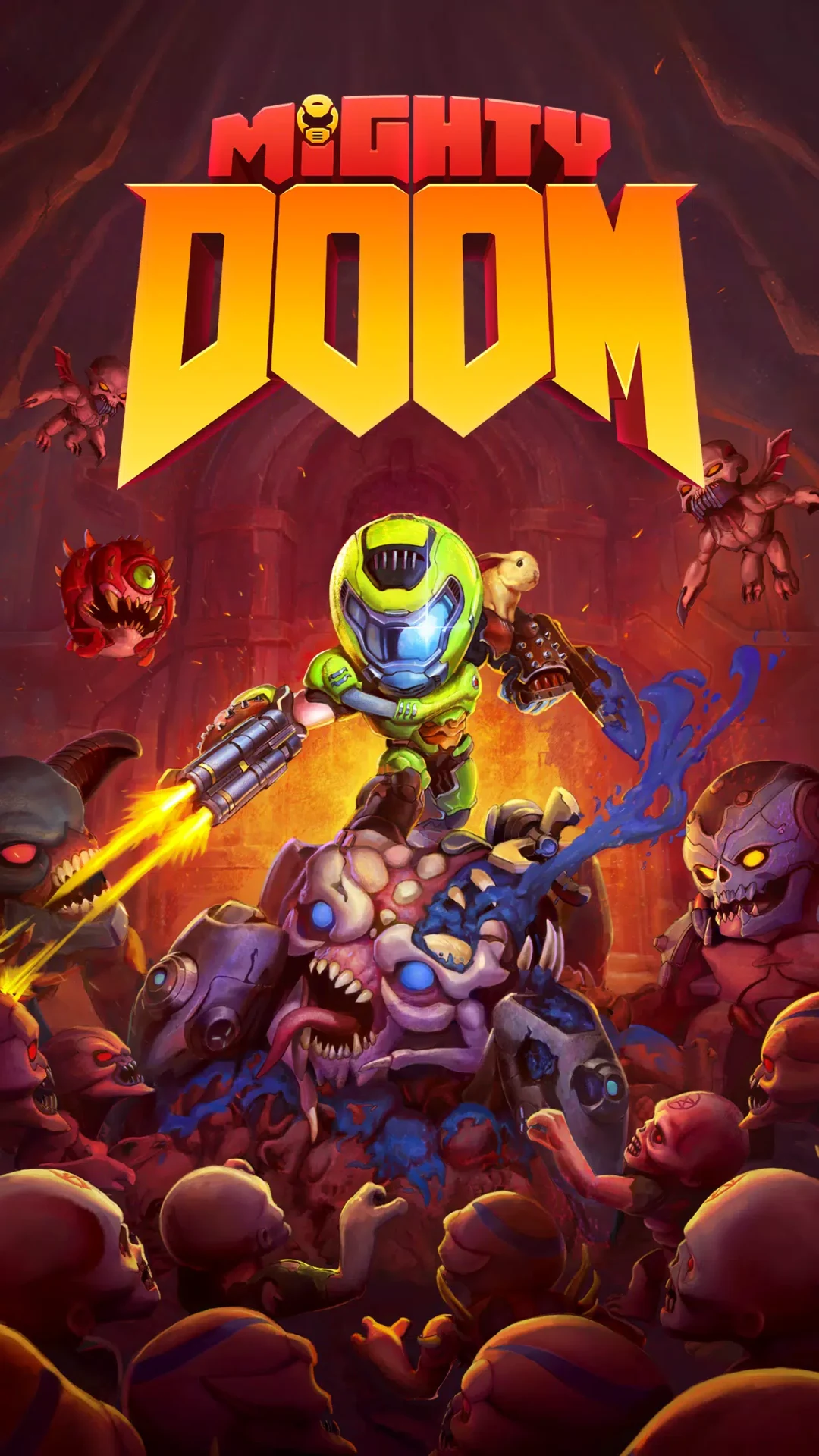
The game uses a toy-like animated version of the DOOM universe. Demons are presented as colorful but dangerous figures, and the environments are animated interpretations of recognizable DOOM locations. Named adversaries include the Baron of Hell and Cacodemon, while other encounters feature enemies such as imps, soldiers, revenants, and prowlers.
Bosses are larger versions of regular enemies with their own attacks and patterns. Their placement at intervals through the stage structure creates major combat checkpoints rather than treating every encounter as an identical group battle. The presentation is reinforced by a heavy-metal soundtrack and an announcer that calls out upgrades during combat, giving weapon and ability changes an audible role in the action.
Character development and daily systems
Experience earned during play allows the Mini Slayer to level up and unlock weapons or bonuses. The game also includes gear and weapon upgrades intended to improve the character over time. A Mastery section can be used to apply random upgrades to selected stats, adding another way to strengthen the character between battles.
Daily rewards and daily missions are also documented systems. The rewards section can provide items such as coins, energy, and gear, while completing daily missions contributes to progression and grants additional rewards. Energy is used to begin runs: the documented system requires five energy for a run, allows a maximum of 20 energy to be held, and replenishes energy gradually. Crystals can be used to accelerate that replenishment.
Difficulty and item economy
The game’s difficulty increases as the player advances. Later stages can combine more powerful enemies with denser encounters and attacks arriving from several directions, making it harder to identify every source of incoming damage. The source describes a notable difficulty rise around the fourth level and further enemy power increases in the fifth level.
Mighty DOOM includes multiple resource types connected to equipment and progression. These include equipment-specific keys for eight equipment categories, energy, coins, and crystals. Crystals can be purchased with real money and can also be spent on loot boxes containing a chance of obtaining rare or epic equipment. The documented economy therefore combines run-based rewards, limited energy, persistent gear development, and optional purchases that can accelerate or expand equipment progression.
Version history
View all19 May 2026 · stable